Deceased Social Security Number Search starts with a call to the Social Security Administration toll‑free line 1‑800‑772‑1213 during business hours. The representative will ask for the full name, birth date and, if known, the SSN, and may require a certified death certificate to confirm the filing. If the SSN is absent, request a Verification of Death letter, which includes the number after the death is reported. Collect medical records—hospital discharge summaries, physician notes, prescription logs, and health‑insurance claim statements—as these often list the SSN on the first page. Insurance cards, Medicare or Medicaid enrollment forms, and long‑term care admission paperwork also show the nine‑digit identifier, speeding the SSA verification.
The Social Security Death Index (SSDI) contains over 94 million records with name, birth and death dates, last residence and, for older entries, the SSN. Users query the SSDI via official SSA portals or licensed third‑party sites that filter by state, gender or year, while the database updates weekly from state death‑certificate filings and omits the most recent 90 days. To obtain a certified copy, submit the SSA’s electronic Request for Deceased Individual’s Social Security Record with a scanned death certificate, or mail Form SSA‑711 with a $25 fee; credit‑card payments use Form SSA‑714. A FOIA request (Form SSA‑89) with a notarized relationship statement and death certificate can yield a PDF of the original application, SSN and benefit history, usually within 30‑60 days.
How to Locate a Deceased Relative’s Social Security Number
To verify whether a late family member was enrolled in Social Security benefits, call the SSA’s toll‑free line at 1‑800‑772‑1213 during regular business hours (8 a.m. to 7 p.m. Eastern). The representative will ask for the full name, date of birth, and the Social Security number if known, and may request a certified copy of the death certificate to confirm the filing. If the number is not on file, request a “Verification of Death” letter, which includes the SSN when the death has been reported. In parallel, examine the deceased’s medical documents: hospital discharge summaries, physician‑signed progress notes, prescription records, and health‑insurance claim statements often display the SSN on the first page or billing section. Insurance cards, Medicare or Medicaid enrollment forms, and long‑term care facility admission paperwork can also contain the nine‑digit identifier. Collect these records before contacting the SSA to streamline the verification process.
Social Security Death Index (SSDI) Overview
The Social Security Death Index, maintained by the United States Social Security Administration, aggregates records of every individual whose death was reported to the agency since the program’s inception in 1936. Currently the database lists over 94 million entries, each containing the person’s full name, birth date, death date, last known residence, and, for older records, the nine‑digit Social Security number. The SSDI is refreshed weekly from state death‑certificate filings, and it excludes records for deaths occurring within the past 90 days to protect privacy. Researchers can query the index through official SSA portals or licensed third‑party services that provide filters for state, gender, and year of death, enabling precise genealogical or legal investigations.
https://socialsecuritydeathindex-search.com/ 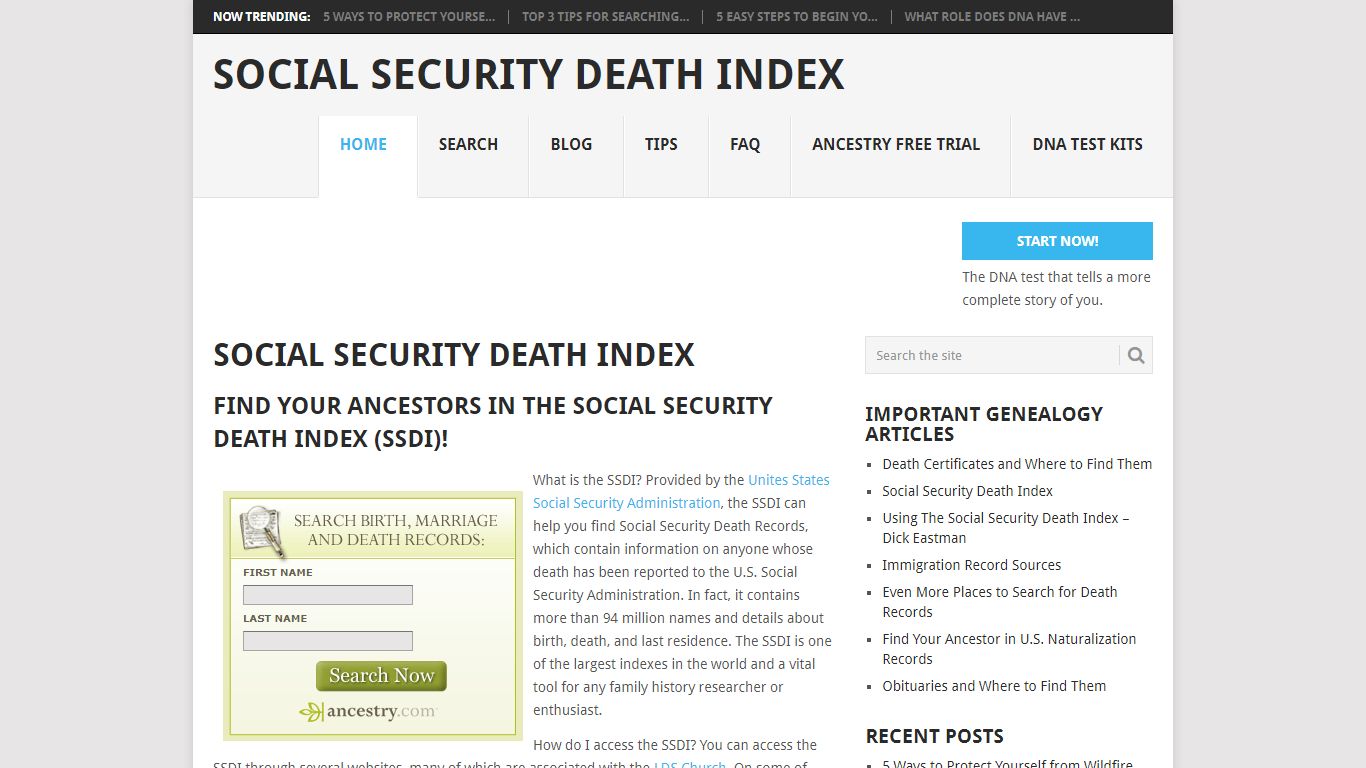
Data Exchange: Requesting the SSA’s Death File
The SSA’s Data Exchange program distributes a full death file that, when available, includes the decedent’s Social Security number, first, middle and last names, exact date of birth, and recorded date of death. In addition to the central death file, the package may contain state‑level death‑record extracts, which provide jurisdiction‑specific details such as the county of death and the issuing vital‑statistics office. Under Section 205(r) of the Social Security Act, the SSA releases the complete dataset only to designated federal agencies (e.g., the Department of Health and Human Services) and authorized state agencies (e.g., state vital‑records departments). Requests must be submitted on the official SSA Data Exchange portal, accompanied by a signed memorandum of understanding that outlines data‑security protocols and permissible uses.
https://www.ssa.gov/dataexchange/request_dmf.html 
Obtaining an Official Copy of a Deceased Person’s Social Security Record
To receive a certified copy of a deceased individual’s Social Security record, submit an electronic request through the SSA’s “Request for Deceased Individual’s Social Security Record” portal, providing the decedent’s SSN, full legal name, and a scanned death certificate. Alternatively, complete Form SSA‑711 (Request for Social Security Card) and mail it with a self‑addressed stamped envelope, a check or money order for the current $25 processing fee payable to the Social Security Administration, and a copy of the death certificate. If you prefer credit‑card payment, you must also fill out Form SSA‑714 (Authorization for Credit Card Payment). The SSA typically processes mailed requests within 10 business days, after which the certified record is mailed to the address listed on the application.
https://faq.ssa.gov/en-us/Topic/article/KA-02585 
Performing a Social Security Number Lookup for a Deceased Individual
Yes, a Social Security Number lookup can be executed for a person who has died, provided the requester complies with legal restrictions. The primary source is the SSA’s Death Master File (DMF), which contains SSNs for deaths reported after 1973. Authorized entities such as law‑enforcement agencies, financial institutions, and genealogical researchers with a signed data‑use agreement may query the DMF directly. Private data‑aggregation services also offer paid lookup tools that pull from the DMF and state death registries; these services require the requester to certify a permissible purpose, such as estate administration or identity‑theft prevention. Unauthorized commercial use of the SSN is prohibited and may result in civil penalties under the Privacy Act.
https://www.usatrace.com/can-i-perform-a-social-security-number-lookup-on-someone-who-has-died/ 
FOIA Request for a Dead Relative’s Social Security Record
The Freedom of Information Act permits individuals to request a deceased relative’s Social Security file directly from the SSA. Submit Form SSA‑89 (FOIA Request) via the SSA’s online portal, attaching a notarized statement proving your relationship (e.g., a copy of the probate court order) and a certified death certificate. The agency typically charges a processing fee of $20 for records older than 25 years, though fees may be waived for genealogical research. Processing time averages 30 days, but can extend to 60 days if the request requires extensive redaction. Once approved, the SSA will provide a PDF containing the original Social Security application, the assigned SSN, and associated benefit history.
https://legalbeagle.com/8066681-social-security-number-dead-relative.html 
Free Online Access to the Social Security Death Index via ObitsArchive
ObitsArchive hosts a publicly accessible version of the Social Security Death Index that currently includes over 89 million entries and receives weekly updates from the SSA’s official database. Users can search by first name, last name, birth year, or death year, and filter results by state or city of last residence. Each record displays the decedent’s full name, birth date, death date, and the last recorded ZIP code; the SSN is omitted for records dated within the past 10 years to comply with privacy regulations. The website also offers a “download CSV” option for bulk data extraction, which requires a free user account and acceptance of the site’s data‑use policy.
https://www.obitsarchive.com/ssdi 
Survivors Benefits Information from the Social Security Administration
When a family member passes away, the funeral home typically notifies the Social Security Administration using the decedent’s Social Security number and the death certificate. Providing the funeral director with the SSN ensures that the death is recorded promptly, preventing overpayment of benefits. Survivors who wish to claim widow’s, widower’s, or child’s benefits must contact SSA at 1‑800‑772‑1213 (TTY 1‑800‑325‑0778) to complete an application and submit documentation such as the death certificate, marriage certificate, and proof of the dependent’s relationship. Benefits are calculated based on the deceased’s earnings record and may begin as early as the month of death, subject to eligibility criteria.
https://www.ssa.gov/benefits/survivors/ 
GenealogyBank’s Social Security Death Index (SSDI) Search Features
GenealogyBank’s SSDI search engine matches queries against three primary fields: the deceased’s first name, last name, and middle initial (or full middle name when available). Because the database truncates first‑name entries after the first 10‑12 characters, users should include common variants or nicknames to improve match rates. The system returns a list of potential records, each showing the name, birth year, death year, and last known state of residence. To obtain the complete death record—including the full SSN and exact death location—researchers can request a “Full Record” for a nominal fee, which provides a PDF copy of the original SSA filing.
https://www.genealogybank.com/explore/ssdi/all 
Social Security Number Lookup Services (Updated August 2022)
Several reputable services allow users to search for a Social Security number by providing the individual’s full legal name, date of birth, and last known state of residence. These platforms access the SSA’s public Death Master File and supplement it with state death‑certificate registries to return a confirmed SSN, along with associated benefit history when applicable. Legitimate use cases include locating heirs for estate settlement, verifying identity during background checks, and confirming the credentials of a deceased author or public figure. All providers require users to certify a permissible purpose under the Fair Credit Reporting Act and to retain audit logs of each query for compliance monitoring.
https://social-security-number-lookup.recordsfindervg.com/ 
Related Search Terms
Explore additional resources that may assist with background checks, public records retrieval, and identity verification across various jurisdictions.
Faulkner County Inmate Search Texas Public Court Record Find Someones Number Phonebook App Find Person By Cell Phone Number Free